01 · 2025 · Case studies · 7 readers
Enterprise Platform Migration
Modernizing a mature production platform without disrupting the business behind it. Not a rewrite. A safer path from what they had to what they needed next.
- Role
- Forward Deployed Engineer
- Focus
- Next.js · Architecture · Performance
- Stack
- Next.js · React · TypeScript · Vercel
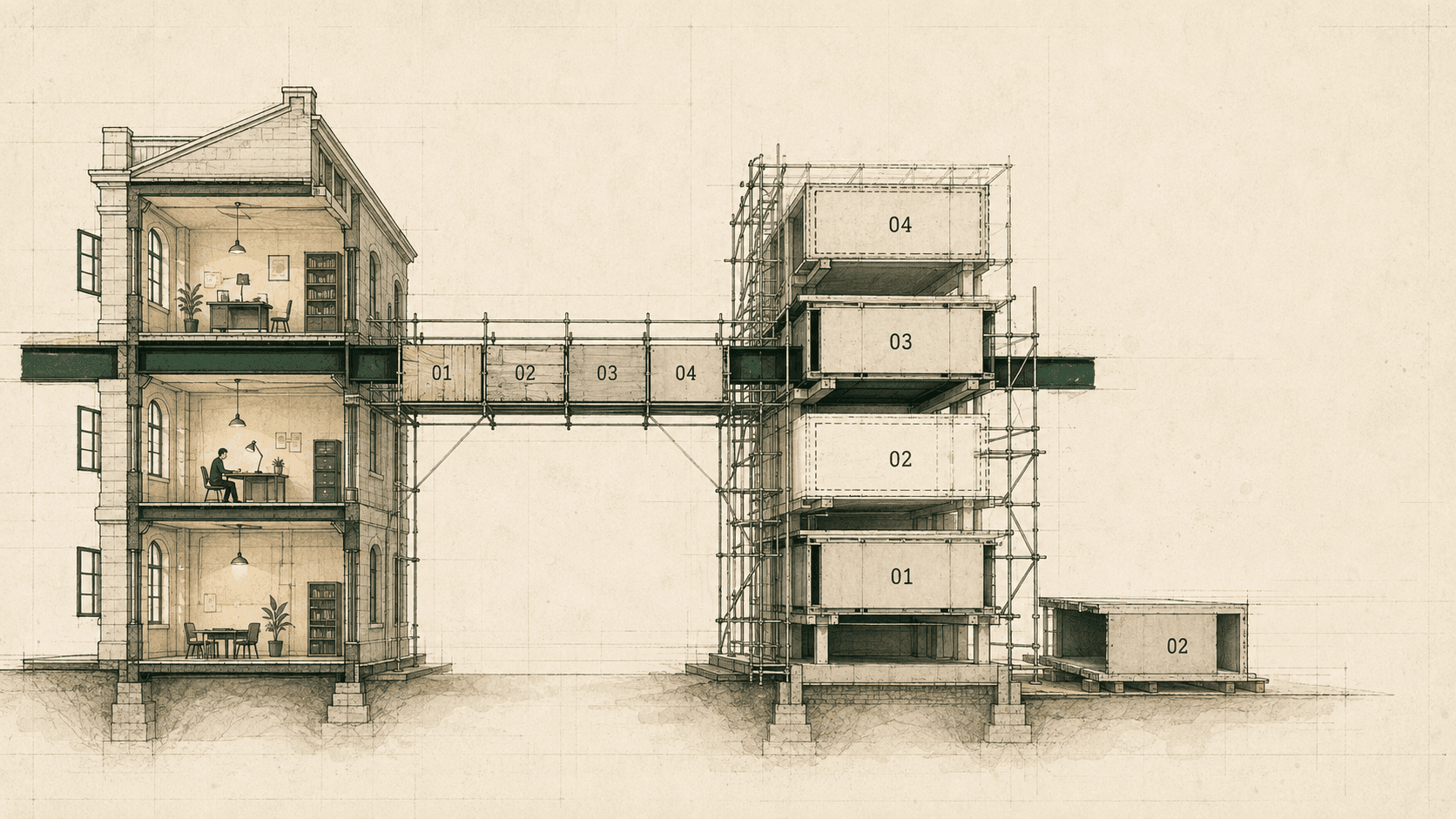
The goal was not to rewrite an application from scratch. It was to help create a safer path from a mature system toward a more modern architecture while product development continued in parallel.
The work centered on reducing migration risk, establishing clearer architectural boundaries, and creating patterns the engineering team could continue using after the engagement.
At a glance
- Context
- Large-scale production web platform
- Constraint
- Modernization alongside active product development
- Focus
- Architecture · Rendering · Performance · Migration strategy
- Outcome
- A clearer incremental migration path with stronger architectural and performance guardrails
01 · Context
Why modernize a system that is already shipping?
Mature applications rarely have the luxury of starting over.
Years of product development had introduced complexity across routing, rendering, data access, and application structure. At the same time, the platform needed to continue supporting ongoing product work.
The challenge was therefore less about choosing new technology and more about determining how modernization could happen safely.
Modernization is a sequencing problem: each step should make the next one easier.
02 · Approach
How do you find the right seams?
Rather than treating the migration as a framework replacement, we focused first on identifying boundaries within the existing system.
That meant thinking through areas such as route ownership, rendering behavior, data boundaries, and the interfaces between legacy and modern parts of the application.
These seams created opportunities to introduce newer Next.js patterns incrementally instead of requiring a coordinated rewrite.
Newer surfaces could evolve independently while existing areas continued operating normally.
The objective was simple: allow the architecture to change without requiring the product to stop changing.
03 · Engineering
Why is performance an architecture problem?
Modernization was not considered successful simply because code moved to a newer framework.
Rendering strategy, JavaScript cost, loading behavior, and production visibility were treated as architectural concerns rather than cleanup work to address later.
Performance considerations became part of how new work was evaluated, and observability helped make regressions easier to identify as the application evolved.
The result was a migration approach that considered both how the system was structured and how it behaved for users.
04 · Tradeoff
Why choose incremental over a rewrite?
A complete rewrite could have produced a cleaner architecture on paper.
It also would have introduced significantly more coordination, migration risk, and disruption to ongoing development.
Instead, the system temporarily supported both legacy and modern patterns.
That tradeoff required discipline: clear ownership, documentation, shared conventions, and safeguards were important to prevent the transitional architecture from becoming permanent complexity.
The goal was not architectural purity.
It was controlled progress.
05 · Outcome
What should a migration leave behind?
The most important outcome was not a single migrated page or technical milestone.
It was establishing a clearer model for how modernization could continue.
The engineering team had stronger boundaries for where new work belonged, clearer patterns for adopting modern Next.js capabilities, and better guardrails around performance and architecture.
The engagement turned a broad modernization objective into a sequence of smaller, lower-risk engineering decisions.
06 · Reflection
What I took from it
Large migrations are rarely won through framework expertise alone.
They require understanding the existing system, identifying where change creates leverage, managing the cost of temporary complexity, and giving teams a path they can realistically continue following.
That is the part of migration work I find most interesting: not replacing the old system, but designing the transition between what exists and what comes next.